Strategic Analysis and Commentary
The War Beyond the Battlefield:
America’s New Counterterrorism Strategy
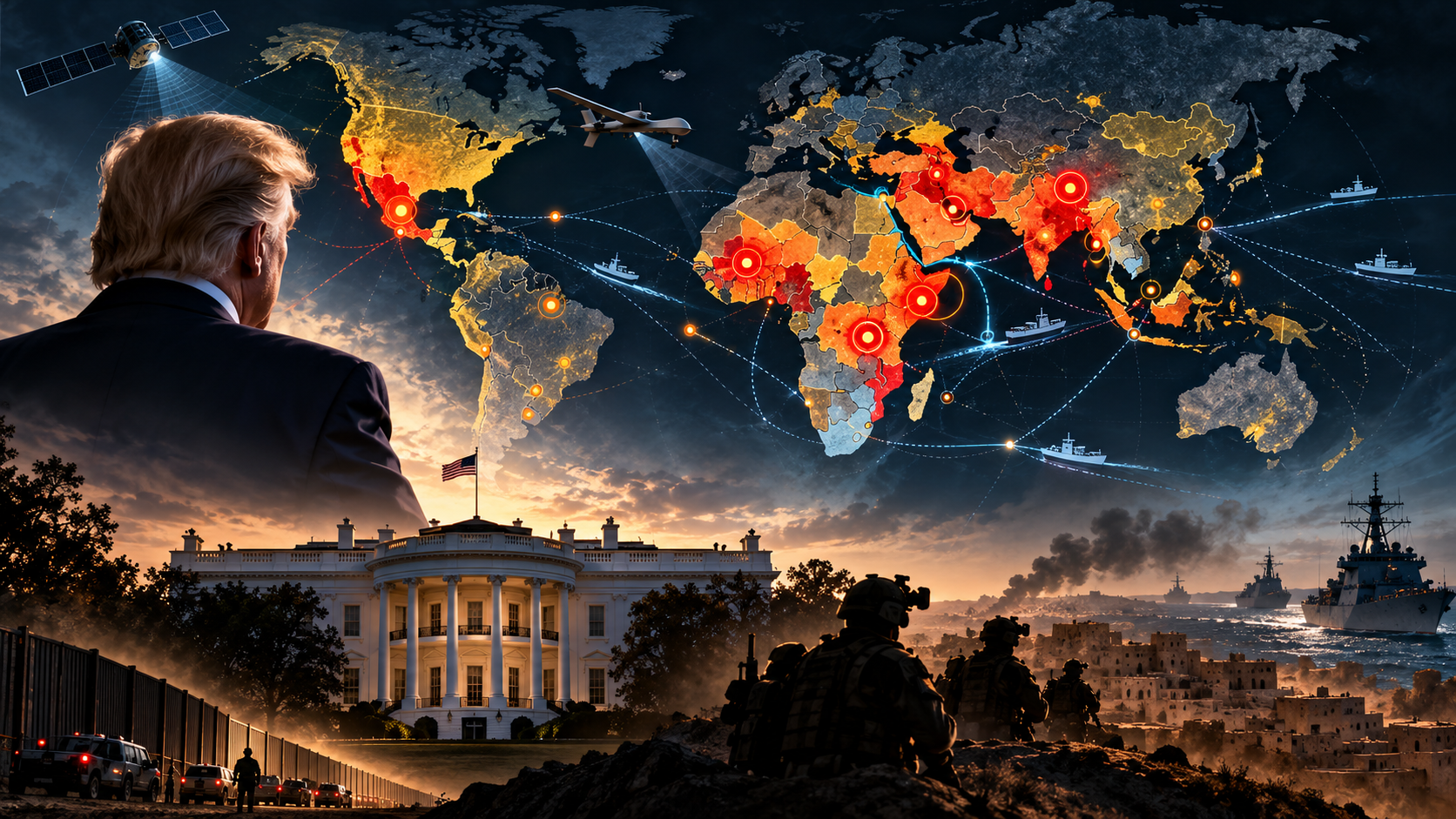
An examination of the campaign against terrorist organizations, their financial lifelines, their state sponsors, and the networks that sustain them.
The enemy is larger than the battlefield
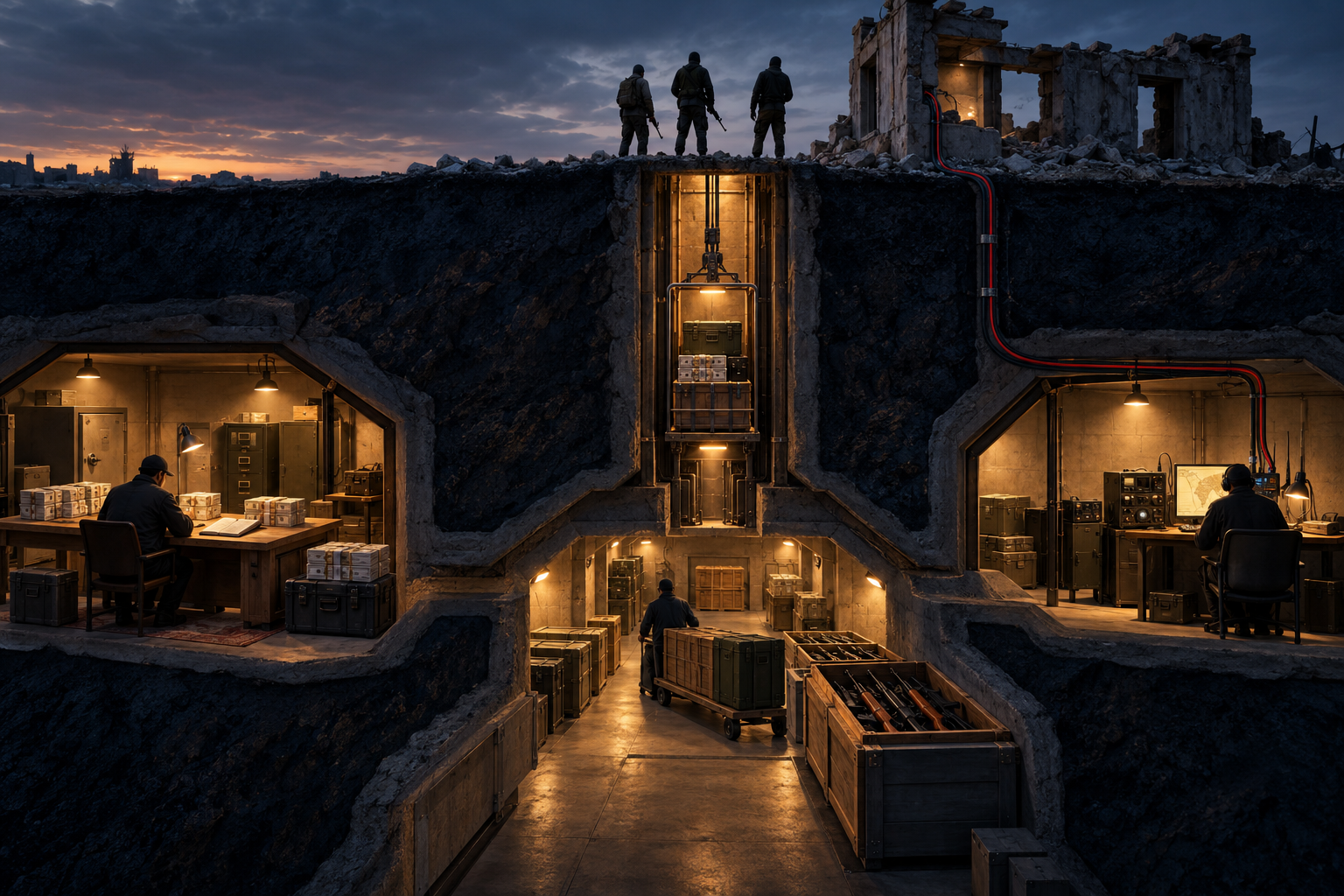
The modern terrorist organization need not command an army or govern a province to threaten a nation. It may possess neither a capital nor a conventional military force. Its strength can reside in an international banking relationship, a clandestine weapons shipment, a commercial drone, a sympathetic intermediary, or a small cell operating thousands of miles from its leadership.
A single organization may recruit in one country, raise money in another, purchase equipment in a third, and attack in a fourth.
This is what makes modern terrorism difficult to defeat. The battlefield is only the visible portion of a much larger enterprise.
The American counterterrorism challenge is therefore not simply to locate armed terrorists and eliminate them. It is to identify the political, commercial, technological, and financial systems through which terrorist organizations preserve themselves and rebuild.
The Trump administration’s May 2026 Counterterrorism Strategy sets out a coordinated campaign against terrorist groups and their supporting networks. It identifies transnational criminal organizations, established jihadist movements, violent left-wing extremist networks and state-enabled threats as security concerns requiring different but coordinated responses. [1]
The essential strategic question is whether the United States can deprive these organizations of the means to regenerate faster than military and law-enforcement operations can dismantle them.
Geography remains a weapon
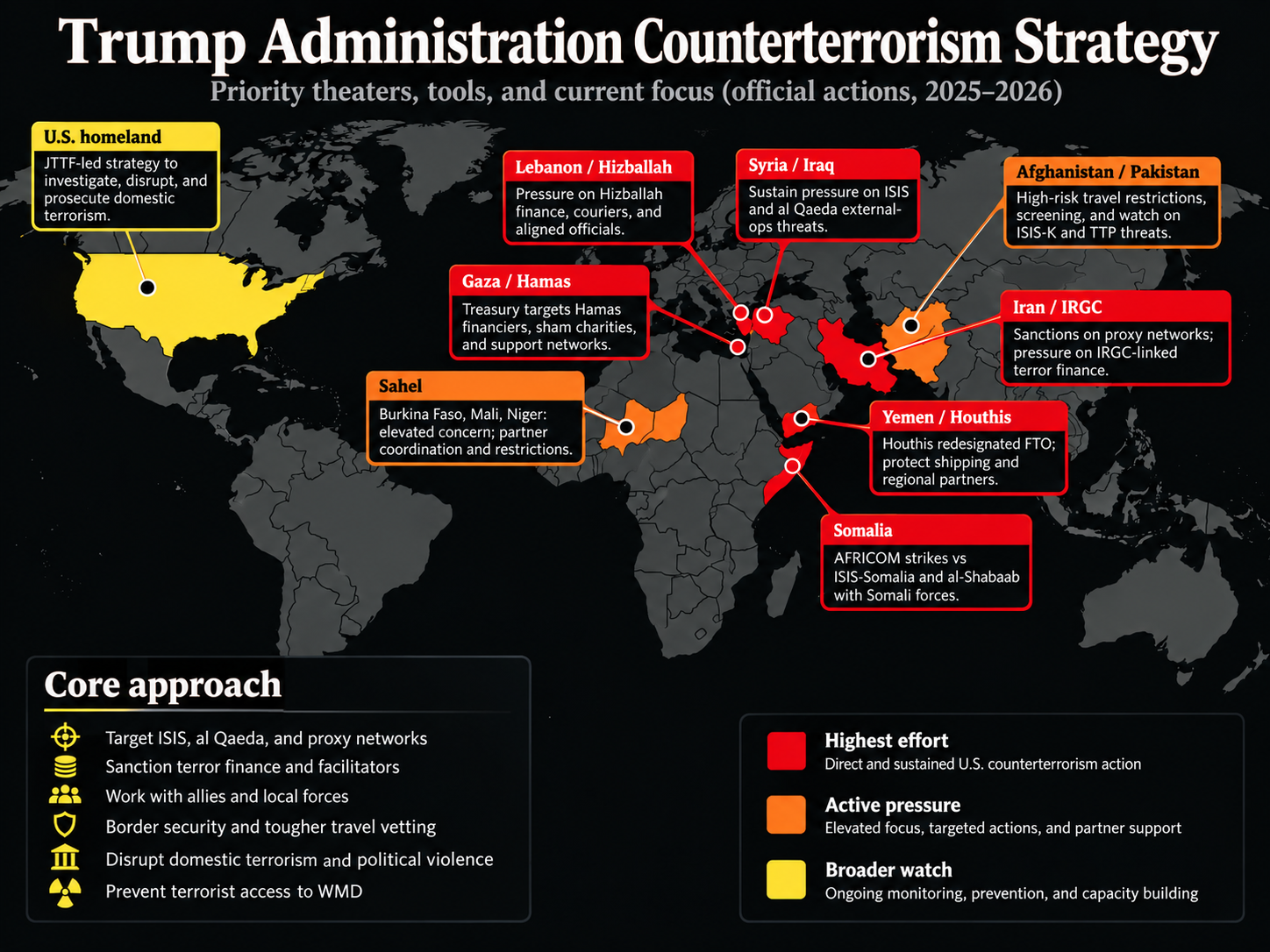
The world’s principal terrorist threats are not distributed randomly. Their locations often reflect strategic opportunities.
Iran occupies a central position in the Middle East’s network of armed proxy organizations. Hezbollah operates from Lebanon, Hamas has maintained military and organizational networks connected to Gaza, and the Houthis control territory in Yemen near the Bab al-Mandeb maritime chokepoint.
These locations matter. An armed organization capable of threatening international shipping can influence commerce far beyond its immediate territory. A proxy possessing missiles and drones can impose substantial defensive costs on neighboring governments. A clandestine financing network can preserve those capabilities despite military pressure.
In Iraq and Syria, ISIS lost its territorial caliphate, but its surviving networks continued to present security concerns. Afghanistan and Pakistan remain important to the analysis of ISIS-K, al-Qaeda affiliates, and other militant organizations. [2]
Across Africa, terrorism has expanded into regions where state authority is fragmented or contested. Somalia hosts al-Shabaab and ISIS-linked networks. The Sahel has experienced the growth of militant organizations amid political instability, military takeovers, and deteriorating security cooperation.
The Western Hemisphere presents a different but increasingly prominent challenge: transnational criminal organizations capable of moving drugs, weapons, money, and people through cross-border commercial and logistical systems.
The administration’s decision to place cartels at the forefront of its 2026 strategy reflects its view that these organizations should be treated as national-security threats rather than conventional criminal enterprises alone.
That is an important change in strategic classification, with consequences for sanctions, intelligence collection, prosecution, and the authorities available to government agencies.
America’s vulnerability begins before an attack
The security of the American homeland depends partly on determining who enters the country, whether government agencies possess reliable information about that person, and whether authorities can identify emerging threats before violence occurs.
The administration has expanded entry restrictions and emphasized screening deficiencies, identity verification, and information-sharing failures among particular foreign governments. [3]
Those measures address an identifiable security problem: governments cannot reliably screen an individual whose identity, travel history, or security background cannot be established.
But immigration and terrorism are not interchangeable phenomena. A historical risk assessment published by the Cato Institute in March 2025 found that foreign-born terrorists have accounted for a very small share of overall American violent deaths, and that risks have differed substantially among categories of entry. [4]
The practical counterterrorism challenge is therefore to identify dangerous individuals with greater precision, not merely to interpret migration volume as a measure of terrorist activity.
The administration’s emphasis on border security is part of a broader strategy that also targets transnational gangs, trafficking networks, false documentation, and illicit financing.
Its effectiveness will depend on how successfully these measures distinguish specific threats from people who pose none.
September 11: When One Day Changed the Meaning of Risk
Statistics can measure the frequency of catastrophe. They cannot fully convey its consequences.

In its fifty-year examination of foreign-born terrorism, the Cato Institute calculates a relatively small annual probability of an American being killed in such an attack. Yet within its own findings lies a fact of extraordinary significance: nearly 98 percent of those deaths occurred on September 11, 2001. [4]
One day. Nineteen hijackers. Nearly three thousand murdered.
An attack that transformed aviation security, American intelligence, military policy, international relations, and the lives of families who would never again see those they loved. [5]
Cato’s precise figure is 97.8 percent: 2,979 of the 3,046 murders its study attributes to foreign-born terrorists on U.S. soil during 1975–2024. That concentration of loss is essential to understanding the average. Frequency describes how often an event occurred; the damage a capable network could inflict also belongs in the calculation of national risk. [4]
The Price of Waiting for Catastrophe
Whether the Trump administration acted first against a particular terrorist organization or responded to an established threat, the danger did not begin with the American response.
Terrorism was already a threat to civilization—a catastrophe waiting for the opportunity to strike. September 11 demonstrated how a relatively small number of determined terrorists could change the course of a nation in a single morning.
The absence of another catastrophe on that scale does not mean the danger has disappeared. Nor should the cost of preventing terrorism be considered without contemplating the vastly greater human, economic, and national-security consequences of failing to prevent it.
There is an important difference between the information available to those charged with defending a nation and the fragmentary picture presented to the public.
National-security officials may possess intelligence and operational information that cannot be disclosed without exposing sources, partners or methods. Public assessment must therefore distinguish what the available record establishes from what remains outside it. Congress and other authorized oversight bodies have a responsibility to examine the underlying intelligence and the relationship between a proposed operation, its costs and the threat it is intended to reduce. [6, 7]
The practical question is whether an operation interrupts a credible threat before its organizers can act: a financial channel closed, a weapons route exposed, a cell disrupted or a partner force made capable of holding territory. These outcomes deserve recognition on their own terms. Preventing an attack can spare lives and preserve freedom even when the public never sees the catastrophe that might otherwise have occurred.
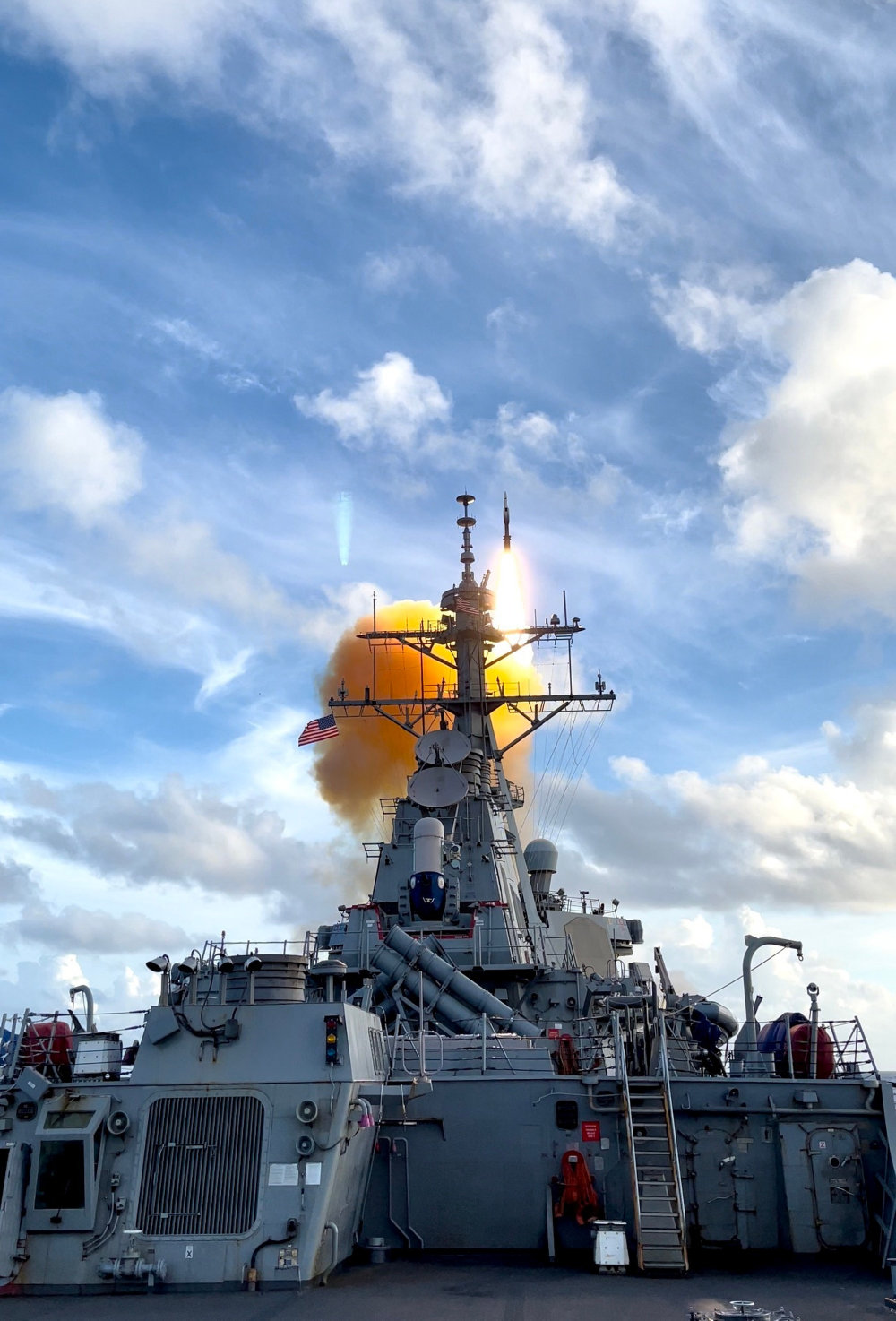
The essential distinction is between the expense of confronting a danger and the price of permitting it to become a disaster.
The financial empire behind the gun
The most consequential terrorist network may be the one that never appears in a military photograph.
Money pays for recruitment, communications, safe houses, transportation, explosives, drones, propaganda, and the support systems that permit an organization to survive.
Some financing occurs through openly illicit commerce. Other transactions are concealed through legitimate businesses, intermediaries, informal payment systems, and organizations presenting themselves as charitable or humanitarian enterprises.
The distinction between genuine humanitarian activity and fraudulent organizational cover is essential. Criminal diversion of charitable funds does not establish wrongdoing by charities generally.
In January and July 2026, the Treasury Department announced actions against organizations and individuals it identified as participants in Hamas financing networks. Treasury described the use of purported charitable organizations and international intermediaries to move funds toward terrorist operations. [8, 9]
On August 20 and September 10, Treasury imposed further sanctions against financial networks it identified as supporting Hezbollah and Kata’ib Hezbollah, including cash-transfer and sanctions-evasion arrangements. [10, 11]
These actions illustrate a strategy extending beyond battlefield destruction.
A sanctioned financial facilitator may lose access to banking services. A disrupted procurement company may no longer purchase components without scrutiny. A clandestine courier network may face greater costs and exposure.
The cumulative strategic effect can be substantial even where no immediate battlefield result is visible.
Financial disruption attacks an organization’s capacity to continue the war, not merely its ability to conduct the next operation.
There is also a legitimate question about major international financial centers.

In 2019, the U.S. Justice Department announced a settlement involving London-headquartered Standard Chartered Bank, which admitted processing transactions that violated Iranian sanctions. The case demonstrated how established international banking infrastructure could be misused to move funds for Iranian entities in violation of U.S. sanctions. [12]
Britain’s own 2025 National Risk Assessment acknowledges serious money-laundering and terrorist-financing vulnerabilities. [13]
Such cases justify scrutiny of international banking institutions, enforcement failures, ownership structures, and the beneficiaries of illicit financial transactions.
They do not, by themselves, establish that the British government or a unified modern British imperial network directs or funds worldwide terrorism. That larger proposition would require documented command relationships, financing decisions, or other specific evidence.
A serious investigation should follow the money wherever it leads—whether London, Tehran, Moscow, Beijing, the Gulf states, or an American financial institution—without substituting geography or historical association for proof of a particular transaction.
Weapons, technology, and the disappearing boundary between civilian and military systems
Terrorist organizations no longer need an industrial weapons complex to obtain dangerous capabilities.
Commercial electronics, communications equipment, navigation systems, drones, and dual-use components can be repurposed for violent operations.
Iran’s military and security apparatus has been repeatedly identified by U.S. authorities as a supplier and enabler of regional armed proxies. Terrorist groups also obtain weapons through battlefield capture, smuggling, diversion from government inventories, criminal markets, and clandestine procurement. [2]
Equipment manufactured in the United States, Russia, China, or elsewhere may eventually appear in an illicit network without the manufacturer or national government having knowingly supplied terrorists.
That distinction matters when examining responsibility.
An arms-transfer investigation must establish the route from original manufacture to actual end user. A component’s country of origin is not sufficient evidence of state sponsorship.
The administration’s 2026 strategy emphasizes interrupting the movement of weapons, dual-use technologies, precursor chemicals, and funding between hostile governments and violent nonstate organizations. [1]
Treasury’s September 11, 2025 sanctions announcement identified China-based Shenzhen Shengnan as a logistics supplier involved in dual-use shipments to Houthi front companies. A March 5, 2025 announcement described Houthi efforts to acquire Russian weapons and a Houthi-linked recruitment operation sending Yemenis to Russia’s war in Ukraine. These records identify particular companies, intermediaries and negotiations through which the network sought capabilities and revenue. They provide concrete targets for financial and procurement disruption. [14, 15]
The objective is to raise the cost of acquiring capabilities while reducing the resources available to use them.
The strategy also identifies preventing terrorist access to nuclear, radiological, biological, and chemical weapons as a priority that cannot be neglected. [1]

Twenty-five years of counterterrorism
The present campaign inherits a problem that successive administrations have confronted since September 11: how to connect intelligence, law enforcement, financial scrutiny, travel security and military power before an attack brings their failures together. In 2004, the 9/11 Commission identified missed watchlisting opportunities, fraudulent travel documents and visa statements, immigration violations, weaknesses in intelligence sharing and inadequate aviation defenses. It estimated that the plot cost $400,000 to $500,000 and made use of American banking services. Small operational expenditures had helped produce consequences far beyond their scale. [5]
The commission’s proposed reforms placed greater weight on integrating intelligence and government action. A decade later, the coalition campaign launched in 2014 brought another lesson: intelligence and air power could support local partners in taking territory away from an organization that had turned conquest into revenue, recruitment and political authority. That campaign extended across administrations and culminated in the loss of ISIS’s remaining territorial stronghold in March 2019. [7, 16]
This history gives the current strategy a practical inheritance. Destroying a sanctuary matters; preventing the movement from rebuilding elsewhere requires continued pressure on the travel, financing, recruitment and procurement systems that survive it.
The first Trump administration and the defeat of ISIS territory
The historical foundation of the present strategy includes the defeat of ISIS’s territorial caliphate in Iraq and Syria.
In March 2019, the United States announced that coalition and partner forces had liberated the remaining territory controlled by ISIS. [17, 16]
This was a consequential military achievement.
It deprived ISIS of the territorial apparatus through which it had exercised coercive government, raised revenue, trained recruits, and projected the image of an expanding state.
The campaign depended on years of coalition operations, including work begun under the Obama administration, Iraqi security forces, Kurdish and Syrian partner forces, and decisions made during Trump’s first term. [16]
The administration gave particular emphasis to operational tempo and military commanders’ authority.
A second major decision came in January 2020 with the U.S. strike that killed Iranian Quds Force commander Qasem Soleimani. [18]
That operation demonstrated Washington’s willingness to strike a senior figure in Iran’s military network directly, while also creating serious escalation risks.
Its lasting strategic significance must be examined through Iran’s subsequent conduct, regional proxy activity, deterrence, and American force protection.
The important historical lesson from the territorial defeat of ISIS is that an organization can lose its capital, territory, and much of its conventional military capacity without losing every operative or ideological adherent.
The disappearance of the caliphate did not eliminate the requirement for intelligence, partner security forces, and continuing operations.
The second term: attacking the system that sustains the threat
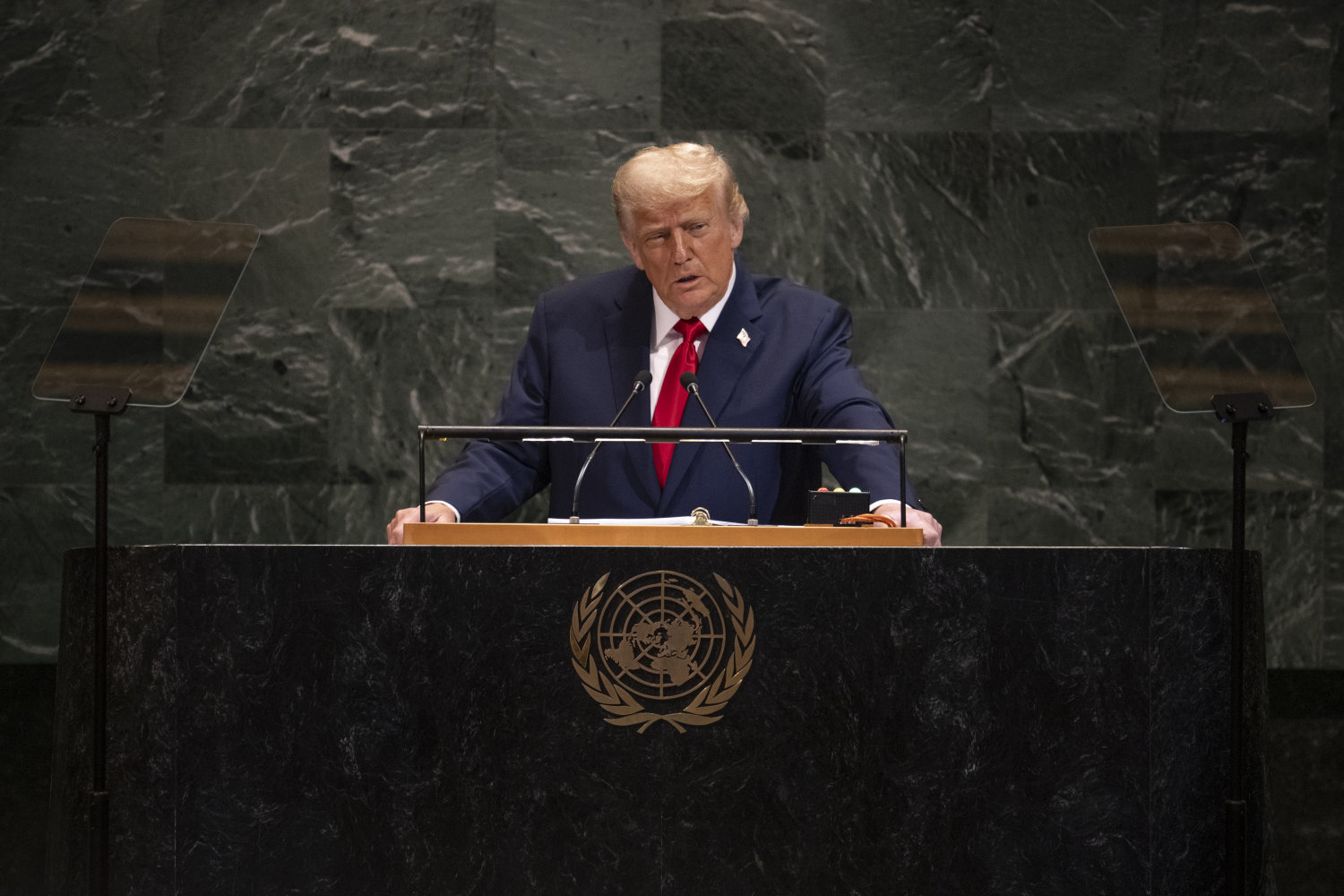
The administration’s second-term counterterrorism program combines several lines of effort that are more revealing when examined together than individually.
Its 2025 designation process placed named cartels and transnational gangs under expanded terrorism-related authorities. The May 2026 strategy then made Western Hemisphere security its first geographic priority. [1]
The administration also continued targeting ISIS and al-Shabaab in Somalia. U.S. Africa Command documented operations in 2026 conducted in coordination with Somali authorities. [19]
In the Middle East, Treasury sanctions have targeted Hamas-associated financing arrangements, Hezbollah cash and commercial networks, and Iranian proxy-support structures.
Following the White House’s direction, Treasury and State imposed chapter-specific designations in 2026: the Egyptian and Jordanian branches became Specially Designated Global Terrorists, while the Lebanese and Sudanese branches received Foreign Terrorist Organization designations as well. Designation decisions concerning individual chapters and entities should be understood according to their actual legal status, rather than assuming every affiliated institution has identical standing. [20, 21, 22]
The administration has also emphasized limiting the ability of terrorist organizations to exploit international waterways and threaten commercial shipping.
These measures belong to different departments, jurisdictions, and operational theaters. Their shared purpose is to deny terrorist and criminal organizations the resources, mobility, protection, and freedom of action required to function.
Military operations, financial sanctions and terrorist designations bring different parts of the same supporting system under pressure. Their accomplishments must be assessed at the level of the capability targeted, rather than dismissed because other parts of the threat survive.
A financial network sanctioned, a weapons shipment interdicted, a terrorist leader captured, or a planned attack disrupted constitutes an identifiable operational outcome.
The strategic significance depends on what capability was lost and whether it can be replaced.
The problem with interpreting war through headlines
There is a profound difference between reporting an event and understanding its significance.
A military operation, a diplomatic concession, a temporary withdrawal, or a delayed sanction may dominate the news for a day. Yet its real importance may not become apparent until months or years later, when the consequences of several decisions converge.
The danger is not merely that the public may receive inaccurate information. It is that even accurate individual facts, stripped of their history, context, and continuity, can produce a distorted picture of events.
National-security policy unfolds across years. News coverage usually unfolds across hours.
This difference creates an analytical difficulty.
An administration may impose sanctions, waive sanctions, expand military operations, reduce deployments, enter negotiations, or delay enforcement. Each decision can be presented as an isolated victory, reversal, concession, or failure.
Yet none can be understood adequately without examining the conditions surrounding it.
A temporary concession may preserve a negotiating channel. A reduction in military forces may reflect greater reliance on capable local partners. A delay may allow additional intelligence collection. A limited operation may serve a larger effort to disrupt financing or isolate an adversary diplomatically.
Equally, a concession can surrender leverage, a withdrawal can expose allies, and delay can give an adversary time to recover.
The sequence matters: what the administration sought to achieve, what changed afterward, which capabilities were gained or lost, and whether the next decision advanced the stated objective. A pause that improves intelligence, a negotiation that separates an adversary from a sponsor, or a shift toward capable partners can strengthen a campaign without producing an immediate battlefield spectacle.
The October 2026 Houthi attacks on Saudi infrastructure demonstrate the difficulty. [23]
The Houthis’ continued ability to launch damaging attacks is a material regional security development. Reporting the attacks is essential. But understanding the wider contest also requires examining Iranian assistance, Saudi defense capabilities, sanctions enforcement, maritime security, negotiations, and the costs incurred by each side.
The event and its strategic meaning are not necessarily identical.
Nor is a public statement of confidence a substitute for an operational assessment.
Congress, courts, foreign governments, and the limits of executive power
Counterterrorism policy is frequently contested within the American political system.
Congress controls funding, establishes legal authorities, conducts oversight, and may restrict or expand executive action. Courts determine whether particular uses of federal power comply with governing law. Executive agencies must translate presidential decisions into enforceable policies.
These checks can produce delays and disagreements. They also provide accountability for extraordinary government powers.
A concrete dispute arose in the United States over operations against Iran. Representative Thomas Massie sponsored H.Con.Res.38, seeking the removal of U.S. forces from hostilities against Iran that Congress had not authorized; Representative Ro Khanna supported it. The White House opposed the resolution in a March 4, 2026 statement, arguing that it would interfere with the President’s authority to protect Americans and confront threats from Iran and its proxies. On March 5, the House rejected the measure, 212–219. The attempt to restrict those operations therefore failed. The episode illustrates the contest over the authority and scope of the campaign, while the vote left that proposed restriction unenacted. [24, 25, 26]
Foreign governments present another category of resistance. Iran disputes U.S. pressure and supports regional partners that Washington has targeted. The Houthis oppose U.S. and allied military measures. Host governments may reject American operations, limit intelligence cooperation, or negotiate with organizations Washington regards as dangerous.
Identifying the precise obstacle is more useful than treating every disagreement as an effort to assist terrorism.
The administration’s 2026 strategy itself states that counterterrorism authorities should not be used against Americans merely because they disagree with the government. [1]
That principle is especially consequential when domestic political violence, ideological movements, and terrorism investigations intersect.
National-security powers acquire legitimacy through their ability to identify actual threats and operate within constitutional limits.
What progress really means
The most useful measures of counterterrorism progress are not confined to territorial gains or the number of armed operatives killed.
They include whether terrorist organizations retain access to money, weapons, communications, recruitment pipelines, protected territory, and international movement.
Recent Treasury actions show that the United States is imposing sanctions on identifiable networks it says support Hamas, Hezbollah, and Iranian proxy organizations. [8, 9, 10, 11]

AFRICOM’s published operations show continued military pressure against ISIS-linked and al-Shabaab targets in Somalia. [19]
The administration’s cartel designations establish additional legal mechanisms for pursuing criminal organizations whose operations cross national boundaries.
The next task is to prevent terrorist organizations from restoring lost capabilities, adapting their financing, recruiting replacements or finding alternative state sponsors. Sustained pressure must follow the network as it changes, carrying the gains of one operation into the next.
The persistence of an adversary does not erase the value of completed operations. Nor does completion of an operation establish that the adversary’s entire network has been dismantled.
Strategy is best understood through changes in the adversary’s available choices.
If clandestine financial transfers become more expensive, operational planning becomes harder. If partner security forces become more capable, terrorist organizations face greater pressure without equivalent American deployments. If sanctions enforcement closes one network and exposes another, intelligence and financial disruption may reinforce one another.
A closed financial channel can expose the next intermediary. Intelligence from an interdiction can reveal another procurement route. Partners who can secure their own territory can deny a network the refuge it needs to rebuild. Persistence gains strategic force when these efforts reinforce one another.
The larger contest
There is a moral dimension to this struggle beyond the calculation of military power.
Terrorism deliberately attacks the conditions under which ordinary people can live freely. It seeks to make a school, a church, a marketplace, a commercial flight, or a public street into an instrument of fear.
The defense of civilian life is therefore not merely an intelligence problem. It concerns the responsibility of government to preserve the security and freedom of those under its protection.
But that responsibility also demands discipline. The fight against terrorism cannot rest on indiscriminate suspicion, collective guilt, or unrestricted governmental authority.
The central question for American strategy is whether military power, intelligence, sanctions, diplomacy, and domestic security can be coordinated to make terrorism progressively more difficult to finance, organize, equip, and execute.
The Trump administration has committed itself publicly to that approach and has undertaken concrete measures across multiple regions.
The results must be judged through their continuing consequences—not merely through the drama of a military strike, the excitement of a presidential announcement, or the criticism accompanying a diplomatic decision.
Terrorism has repeatedly survived the destruction of individual leaders and territorial strongholds because the structures permitting its recovery remained intact.
Any strategy seeking a more durable result must therefore confront the entire supporting system.
The battlefield is where terrorism becomes visible.
The larger contest is over whether the world continues to provide the territory, money, weapons, technology, and political protection that allow it to return.
Sources
Checked October 17, 2026, Pacific time.
[1] The White House, U.S. Counterterrorism Strategy. May 2026.
https://www.whitehouse.gov/wp-content/uploads/2026/05/2026-USCT-Strategy-1.pdf?inline=1
[2] U.S. Department of State, Country Reports on Terrorism 2023. Reporting year 2023; published December 2024.
https://2021-2025.state.gov/reports/country-reports-on-terrorism-2023/
[3] The White House, Restricting and Limiting the Entry of Foreign Nationals to Protect the Security of the United States. December 16, 2025; effective January 1, 2026.
https://www.whitehouse.gov/presidential-actions/2025/12/restricting-and-limiting-the-entry-of-foreign-nationals-to-protect-the-security-of-the-united-states/
[4] Alex Nowrasteh, Cato Institute, Terrorism and Immigration: 50 Years of Foreign-Born Terrorism on US Soil, 1975–2024. March 10, 2025.
https://www.cato.org/policy-analysis/terrorism-immigration-50-years-foreign-born-terrorism-us-soil-1975-2024
[5] National Commission on Terrorist Attacks Upon the United States, The 9/11 Commission Report, Executive Summary. July 22, 2004.
https://www.9-11commission.gov/report/911Report_Exec.htm
[6] The White House, Executive Order 13526, Classified National Security Information, sections 1.4 and 1.7. December 29, 2009.
https://obamawhitehouse.archives.gov/realitycheck/the-press-office/executive-order-classified-national-security-information
[7] The 9/11 Commission Report, Chapter 13, How to Do It? A Different Way of Organizing the Government. July 22, 2004.
https://www.9-11commission.gov/report/911Report_Ch13.htm
[8] U.S. Treasury, Treasury Exposes and Disrupts Hamas’s Covert Support Network. January 21, 2026.
https://home.treasury.gov/news/press-releases/sb0368
[9] U.S. Treasury, Treasury Disrupts Muslim Brotherhood and Hamas Financial Networks. July 23, 2026.
https://home.treasury.gov/news/press-releases/sb0572
[10] U.S. Treasury, Treasury Increases Sanctions on Hizballah and Targets Network Smuggling Millions in Cash for Hizballah. August 20, 2026.
https://home.treasury.gov/news/press-releases/sb0611/
[11] U.S. Treasury, Operation Economic Outcast Strikes Iran’s Global Terrorist Proxy Network. September 10, 2026.
https://home.treasury.gov/news/press-releases/sb0626/
[12] U.S. Department of Justice, Standard Chartered Bank Admits to Illegally Processing Transactions in Violation of Iranian Sanctions and Agrees to Pay More Than $1 Billion. April 9, 2019.
https://www.justice.gov/archives/opa/pr/standard-chartered-bank-admits-illegally-processing-transactions-violation-iranian-sanctions
[13] HM Treasury and Home Office, National Risk Assessment of Money Laundering and Terrorist Financing 2025. July 17, 2025.
https://www.gov.uk/government/publications/national-risk-assessment-of-money-laundering-and-terrorist-financing-2025
[14] U.S. Treasury, Houthi network sanctions announcement (Shenzhen Shengnan and dual-use procurement). September 11, 2025.
https://home.treasury.gov/news/press-releases/sb0243
[15] U.S. Treasury, Houthi network sanctions announcement (Russian weapons procurement negotiations and recruitment). March 5, 2025.
https://home.treasury.gov/news/press-releases/sb0041
[16] Global Coalition, Coalition partner forces liberate all territory held by Daesh. March 23, 2019.
https://theglobalcoalition.org/en/coalition-partner-forces-liberate-all-territory-held-by-daesh/
[17] The White House, Statement from the President on the Liberation of ISIS-Controlled Territory. March 23, 2019.
https://trumpwhitehouse.archives.gov/briefings-statements/statement-president-liberation-isis-controlled-territory/
[18] U.S. Department of Defense, Statement by the Department of Defense. January 2, 2020 (U.S. publication date).
https://www.defense.gov/News/Releases/release/article/2049534/statement-by-the-department-of-defense/
[19] U.S. Africa Command, official press releases on ISIS-Somalia and al-Shabaab operations. April 22 and April 27, 2026.
https://www.africom.mil/media-gallery/press-releases?galleryslug=press-releases&pagenumber=3&query=%2A
[20] U.S. Treasury and State, Treasury and State Departments Designate Muslim Brotherhood Branches as Terrorist Organizations. January 13, 2026.
https://home.treasury.gov/news/press-releases/sb0357
[21] Federal Register, Lebanese Muslim Brotherhood Foreign Terrorist Organization designation. Effective January 14, 2026.
https://www.govinfo.gov/content/pkg/FR-2026-01-14/pdf/2026-00573.pdf
[22] Federal Register, Sudanese Muslim Brotherhood Foreign Terrorist Organization designation. Effective March 16, 2026.
https://public-inspection.federalregister.gov/2026-05072.pdf
[23] United Nations DPPA, These attacks must cease immediately: Guterres condemns deadly Houthi strike on Riyadh. October 11, 2026.
https://dppa.un.org/en/news/these-attacks-must-cease-immediately-guterres-condemns-deadly-houthi-strike-on-riyadh
[24] U.S. Congress, H.Con.Res.38, 119th Congress, sponsor Representative Thomas Massie. Introduced June 17, 2025.
https://www.congress.gov/bill/119th-congress/house-concurrent-resolution/38
[25] Executive Office of the President, Office of Management and Budget, Statement of Administration Policy on H.Con.Res.38. March 4, 2026.
https://www.whitehouse.gov/wp-content/uploads/2026/03/SAP-HConRes38.pdf
[26] Clerk of the U.S. House of Representatives, Roll Call 85, H.Con.Res.38. March 5, 2026; rejected 212–219, including Representative Ro Khanna voting yea.
https://clerk.house.gov/Votes/202685