Opinion · Character, Ethics & Traditional Values
Two Fires: The Flame That Builds and the Fire That Consumes

When communities feel overwhelmed by mass immigration, burdened by stifling taxation, confronted with overcrowded schools and high unemployment, discontent can harden into anger. When hope disappears, destruction can masquerade as a way forward.
Part One: The Flame That Builds and the Fire That Consumes
Morning arrives reluctantly upon a wounded street in France. The smoke has begun to lift, revealing shattered windows, blackened walls, and the scattered remnants of things once carefully made. A shopkeeper stands before the ruins of his livelihood, surveying what remains of years of sacrifice. Nearby, a young man walks through the wreckage, still carrying the anger that brought him into the streets the night before.
Neither may know the other’s story. Yet both believe something precious has been taken from them.
There is a peculiar tragedy in human resentment. What begins as a longing for justice can, when surrendered to bitterness, become an appetite for destruction. The suffering that first inspired a demand for change becomes the very suffering inflicted upon others.
Across Europe, questions of economic hardship, political authority, identity, and the future have stirred profound discontent. Such grievances deserve to be heard. Peaceful protest has long been an expression of human dignity and liberty. Yet where protest becomes violence, the distinction between seeking justice and inflicting injury becomes impossible to ignore.
There are, after all, two kinds of fire.
One consumes whatever stands before it. It promises purification through destruction, persuading the angry that the world must first be broken before it can be made whole. Its flames rise quickly, drawing crowds toward their terrible beauty. But when the night has passed, the fire offers no answers to those left standing among the ashes.
The other fire burns less visibly. It lives within the conscience of an ordinary man who chooses restraint when vengeance would be easier, within a mother who teaches her children compassion rather than contempt, within neighbors who rebuild what strangers have destroyed.
This quieter flame demands a greater courage, for it requires a person to master himself before attempting to master his circumstances.
Civilizations are not sustained merely by their laws, institutions, or magnificent buildings. They endure through countless acts of human decency, through inherited wisdom, through the willingness of one generation to preserve something beautiful for the next.
And therein lies the great paradox of freedom: its survival depends not only upon the courage to resist injustice, but upon the character to resist becoming unjust ourselves.
The young man may return to that wounded street tomorrow. Perhaps he will encounter the shopkeeper again. Between them lies a choice neither can make for the other: whether grievance shall remain a prison or become the beginning of understanding.
A city may be set ablaze in a single night, yet require generations to restore what was lost. But the deeper restoration begins in places no crowd can see, within the human soul, where anger may yet surrender to wisdom and despair to hope.
For the fire that consumes leaves ashes.
The fire that transforms leaves something capable of growing.
Part Two: When Anger Finds Its Opening
PART TWO / REPORTED ANALYSISThe building that belonged to everyone


On October 17, 2026, fire consumed the roof of Limoges’ town hall and brought down its clock tower. The building had opened in 1883. Mayor Guillaume Guérin told Reuters that attackers had forced entry and that national police had been deployed elsewhere. He described preparation and organization behind the assault. These were his assessments of a specific attack, carrying a direct accusation of failed protection. [1]
A town hall is where a republic acquires an address. It represents the ordinary expectation that public authority will remain available tomorrow. Its destruction strikes beyond the price of stone and timber. It tells residents that something held in common can be taken from them by people willing to use force. That is why the question of responsibility must reach both the attackers and the officials charged with protecting the city.
A town hall is where a republic acquires an address.
The grievances and the opening
France’s movement began in September around schools, teacher shortages and deteriorating facilities. By October 17, demands about living costs and public services had brought large crowds into the streets. Peaceful marches coexisted with arson, looting and attacks on police by violent groups. A protest created an occasion; particular people chose to exploit it. The decision to burn a public building cannot be explained away by the grievance that brought someone else to a peaceful march. [3]
The crucial distinction is between a grievance, a political objective and a criminal intention. A parent may want a better school. A party may want to weaken the government. An extremist may want confrontation with the state. A looter may want merchandise. They can occupy the same street without sharing a purpose. Understanding the unrest requires following those different intentions until evidence shows where they meet.
The far-left connection deserves scrutiny
On October 1, Reuters reported that a person close to the prime minister supplied a crisis-meeting readout attributing the origins of the school protest movement to La France Insoumise (LFI), known in English as France Unbowed, and allied far-left groups. LFI denied organizing the protests and said it supported nonviolent demonstrations. The reported intelligence assessment is a serious lead about mobilization; it is not a court finding assigning every later crime to that party. [4]
The Limoges case provides more specific evidence. In an October 20 statement, the city said its mayor had been informed of the arrest of a local resident whom he identified as an ultra-left member flagged for security surveillance. The statement sought severe punishment if the facts were established. An arrest advances an investigation; guilt and each participant’s role remain matters for judicial determination. [2]
October 20 Agence France-Presse (AFP) reported French intelligence attributed a leading role in the October 17 violence to ultra-left and radical far-left militants. The assessment grouped roughly 5,000 monitored ultra-left activists into three currents: Antifa, a name derived from anti-fascist activism and the largest of the three; anarcho-autonomists; and anarchists. It attributed attacks on police and state symbols to these milieus, while describing looting as involving a broader, mixed population. It did not identify France Unbowed or the French Communist Party as participants in the violence. The source described a convergence of radical activists and other young people, with destabilizing institutions among the ultra-left’s objectives. [32]
By October 22, political opponents were accusing Jean-Luc Mélenchon and LFI of helping inflame the crisis. Mélenchon rejected responsibility and blamed government failures. Political rhetoric, protest organization and direction of an arson attack are separate questions. Each deserves an answer supported by its own evidence. [5]
This account strengthens the case for investigating activists who may have turned public frustration toward deliberate confrontation. The figure of 5,000 describes a monitored milieu across France; it is not a count of identified offenders on October 17. A reported intelligence assessment also remains distinct from a judicial finding about who incited or directed a particular crime. It cannot establish that Antifa commanded unrest throughout Europe. [32]
The moral question is sharper when anger meets people prepared to give it a target. A movement that encourages attacks on the institutions its neighbors depend upon must answer for that encouragement. Citizens deserve protection from those who exploit their grievances, as surely as they deserve a government willing to address them.
The conservative case against revolutionary politics is strongest when it identifies conduct precisely. Who supplied equipment? Who selected the target? Who coordinated movement? Who encouraged confrontation, and who tried to prevent it? Responsibility may extend beyond the person holding a flame, but a shared ideology alone cannot establish a chain of command. The public deserves that chain wherever investigators can prove it.
High demands on citizens, disappointing returns
Economic discontent has a material foundation. Organisation for Economic Co-operation and Development (OECD) figures put French tax revenue at 43.5 percent of gross domestic product (GDP) in 2024, against an OECD average of 34.1 percent. France ranked second among the organization’s 38 members. Those figures measure aggregate revenue, including social contributions; they are not the tax rate paid by every household. They nevertheless establish the scale of resources collected by the state. [6]
When such a state cannot provide satisfactory classrooms or protect a civic building, citizens are entitled to ask what their sacrifices have purchased. Calling taxation stifling is an editorial judgment; testing that judgment means examining work incentives, household budgets and the usefulness of spending. Governments should answer for results, rather than treating the size of their budgets as proof of compassion.
Eurostat reported European Union (EU) unemployment of 6.1 percent in August 2026 and youth unemployment of 15.4 percent. Youth unemployment measures unemployed people under 25 as a share of the youth labor force, not all young people. The gap points to a particular difficulty in entering work. It does not establish why any individual joined a riot. [7]
For someone looking for a first job, a future can narrow into a succession of closed doors. Political movements then compete to explain who closed them. Some offer reform; others offer an enemy. A responsible government must make productive adulthood attainable. A responsible citizen must still choose what to do with disappointment. Hardship explains pressure without granting permission to destroy another person’s livelihood.
Borders, capacity and political accountability
Mass immigration belongs in an examination of public capacity. Decisions about admission, asylum, integration and removal should be tested against housing, classroom places, public safety and the public’s consent. Whether migration caused a particular school shortage requires local enrollment, staffing and budget evidence. Whether migrants participated in a particular attack requires evidence about its participants. Neither question is answered by the sight of a burning street.
European authorities acknowledge the need to change migration management. The EU’s Pact on Migration and Asylum entered into application on June 12, 2026, with rules covering screening, asylum procedures, responsibility-sharing and border management. Its adoption records a policy response; its effectiveness must be assessed through implementation and outcomes. [8]
The political failure worth investigating is the decision to make commitments without providing the capacity to honor them. If officials protect an ideological reputation while concealing costs or ignoring warnings, the public should see the decisions and documents. Corruption requires evidence of misconduct; failure, evasion and political self-preservation also deserve scrutiny in their own right. Naming those distinctions makes accountability more exacting, not less.
One continent, different conflicts
Belgium and Italy also experienced demonstrations and violent confrontations during the October unrest. Reporting from those countries connects mobilization to education and living-cost pressures. Such overlaps warrant examining activist links and shared tactics, while preserving the identities and decisions of the people involved in each place. [9]
Austria’s student union advertised an October 22 demonstration over university funding, arguing that planned allocations fell short of need. In Greece, students and teachers marched on October 21 over education, facilities and classroom crowding. Those stated purposes establish education protests; they do not establish that everyone participating sought disorder. [10][11]
In Germany, an October 21 report described demonstrations planned for October 31 over living costs, public spending and conscription. Organizers rejected violence, while security sources warned that radicals might exploit the gatherings. A warning about a future event must remain a warning, rather than becoming a report of a riot that has already happened. [12]
Serbia’s movement grew from demands for accountability after a railway-station canopy collapse killed 16 people in November 2024. Student supporters subsequently organized an electoral challenge to Aleksandar Vučić’s governing party. Allegations of corruption and the government’s response belong to that distinct history. Treating it as another branch of the Limoges attack would obscure the facts. [13]
This account establishes no matching current British riot in the same October sequence. The wider issue is global in significance: how states retain consent when citizens lose confidence. Shared anxieties can cross borders through example and publicity. A common international command, however, requires evidence of actual coordination.
Britain’s dependence on immigration for workforce expansion raises serious questions about domestic opportunity and economic policy. A June 2024 analysis reported that foreign-born workers accounted for approximately 90 percent of the net increase in employment over the preceding twenty years. That finding concerns the whole economy, rather than government recruitment, and does not by itself establish that British-born workers were displaced. [31]
America: renewal must produce results

For Americans who believe Democratic governance weakened border control and displaced responsibility with ideology, President Trump’s return represents an effort to recover national sovereignty. That conservative interpretation should rest on outcomes people can inspect. The clearest example here concerns enforcement: the United States Department of Homeland Security’s (DHS) preliminary fiscal 2026 figures reported 98,708 southwest-border apprehensions. The Financial Times placed that total at the lowest annual level since 1968, compared with more than two million in both 2022 and 2023. Apprehensions are an enforcement measure, not a complete census of every unlawful crossing. [14][15]
That is a substantial change in a core governmental function. It demonstrates that a different direction can produce a different result. The larger promise of renewal also concerns whether citizens can afford a home, find useful work and expect their children to advance.
September’s economic figures capture conditions during a far-reaching change in policy. The United States Bureau of Labor Statistics (BLS) reported unemployment of 4.2 percent, a monthly payroll gain of 29,000 and consumer prices 3.7 percent above a year earlier. Those readings matter to families. Assessing the renewal effort also requires examining the laws, investment decisions and institutional changes intended to shape the years ahead. A factory must be financed, built and equipped before its full contribution appears in employment and output. [16][17]
Congress supplied part of that foundation through Public Law 119-21, signed July 4, 2025. Its business provisions restored immediate deductions for domestic research and made 100-percent first-year depreciation permanent for eligible equipment. The Internal Revenue Service (IRS) also issued guidance for qualifying production buildings, with eligibility conditions and deadlines. These measures improve the timing of investment deductions and encourage companies to place productive capacity in America. The same law provided resources for shipbuilding, missile defense and munitions supply chains, while directing additional offshore oil and gas lease sales. [20][21][22]
The investment program reaches across industry. An October 8 White House account identified a proposed $15 billion steel complex in Iowa, $3.7 billion in private capital for Anduril’s Maryland shipyard project, and $3 billion for Becton Dickinson’s domestic manufacturing expansion. It also described prospective nuclear, natural-gas and pharmaceutical investments. These commitments represent a pipeline of future capacity whose progress can be followed through construction and hiring. The Council of Economic Advisers (CEA), meanwhile, reported 72,000 additional manufacturing jobs so far in 2026 in its October manufacturing review. That year-to-date sector measure adds context to September’s economy-wide monthly figure. [23][24]
Energy supply and regulatory reform support the same effort. The Energy Information Administration (EIA) reported record American crude-oil production in 2025. The administration’s ten-for-one regulatory order directs agencies to identify existing rules for removal when introducing new ones, subject to legal requirements and exemptions. Alongside the new leasing provisions, these actions seek to make production and expansion less costly and more predictable. Existing output and future capacity reflect investment decisions made over several years. [20][25][26]
Stewardship of public money is another part of the program. The Office of Personnel Management (OPM) reported that health-plan carriers stopped or reduced $237.7 million in claims before payment and recovered another $21.9 million for calendar 2025. Separately, the Centers for Medicare & Medicaid Services (CMS) removed subsidies associated with 189,000 duplicate-coverage or deceased enrollee records in 2026, projecting approximately $1.5 billion in savings over the following year. OPM also describes workforce reductions alongside selective hiring for essential missions. Recoveries, projected savings and staffing changes each have their own measure of success. [27][28][29]
Security belongs in this economic account as well. Defense-industrial appropriations support the capacity to produce ships, interceptors and munitions. Treasury’s October 8 sanctions action targeted 17 vessels in Iran’s petroleum network as part of Operation Economic Outcast, which seeks to disrupt revenue supporting the regime’s military and terrorist financing. Together, industrial resilience, energy capacity and pressure on hostile financial networks express a strategy of reducing exposure to external coercion. Appropriations and sanctions establish action; stronger deterrence and safer commerce must be judged through their results. [20][30]
The American comparison therefore concerns a broad effort to restore productive capacity, accountable government and national independence. Its direction is already visible in enacted policy, announced projects and reported sector gains. Its larger promise will be tested as those changes become sustained employment, reliable public services and greater household purchasing power. The monthly statistics belong within that unfolding record.
America can offer Europe an example of recovered agency: policies can be changed, borders can be enforced and governments can be replaced through elections. This account does not establish that European rioters act from resentment of American gains. Their motives must be read from their own conduct and communications. The comparison belongs to the argument about governing choices, rather than a claim to know what every person in a crowd secretly thinks.
America can offer Europe an example of recovered agency.
The republic that must be kept
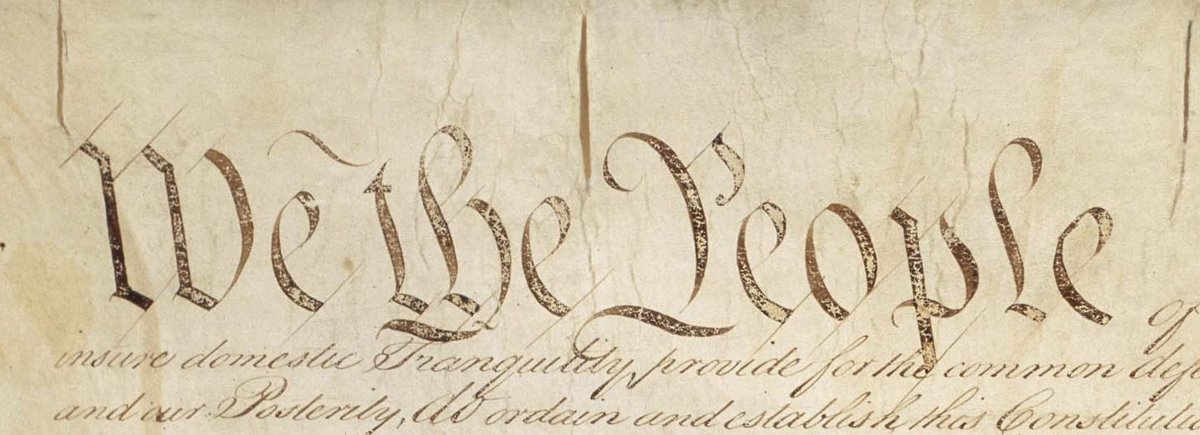
The Bill of Rights protects speech, peaceful assembly and petition. It also protects people against arbitrary government power through safeguards that include due process. Constitutional renewal therefore demands two forms of discipline: citizens must reject political violence, and public officials must exercise authority within the law. A republic protects dissent while holding individuals responsible for crimes. [18]
On October 18, Limoges offered another public response to the fire. The city records a solidarity gathering and march toward the devastated town hall, joined by citizens, municipal representatives and neighboring mayors. Public services would continue. The building had been attacked; the community’s attachment to its shared civic home remained visible. [19]
Here the two fires become more than an image. One turns inherited achievement into rubble. The other lives in citizens who insist upon honest government, lawful borders, useful work, sound schools and justice administered without political favoritism. Anger may reveal that something is wrong. The work of a free people is to discover what is wrong, hold the responsible accountable, and build something worth handing on.
Sources & editorial notes
Part One is preserved verbatim as a literary introduction; its shopkeeper and young man are illustrative figures, not interviewed witnesses. Part Two combines sourced reporting with the author’s conservative analysis. The hero is a fictional Paris scene generated using artificial intelligence (AI), not a news photograph or documentation of a fire at Paris city hall. The caption expresses a conditional editorial interpretation. Criminal allegations and official assessments are attributed; arrest is not conviction. Economic releases have different reference periods and may be revised. The reported town-hall fire discussed in Part Two occurred in Limoges.
- Reuters, October 18, 2026. Limoges town hall: damage and mayor’s account of preparations and police deployment.
- City of Limoges, October 20, 2026. Mayor’s statement about an arrest and alleged ultra-left affiliation; not a conviction.
- Reuters, October 17, 2026. France’s protests, grievances and violence; officials’ accounts.
- Reuters, October 1, 2026. Government-source account of an intelligence assessment and LFI’s denial.
- Reuters, October 22, 2026. Political accusations against Mélenchon and his response.
- Organisation for Economic Co-operation and Development (OECD), Revenue Statistics 2025: France. 2024 tax-to-GDP ratio, comparative rank and OECD average.
- Eurostat, October 1, 2026. August 2026 total and youth unemployment; definitions.
- Council of the European Union. Migration and asylum pact; application began June 12, 2026.
- Le Monde, October 20, 2026. Separate movements in Italy and Belgium, including violent confrontations.
- Austrian National Union of Students, October 2026. Organizer’s notice and stated university-funding demands.
- Reuters, October 21, 2026. Greek students’ and teachers’ education demands.
- Anadolu Agency, October 21, 2026. German protests planned for October 31; organizers reject violence; security warnings.
- Associated Press, October 19, 2026. Serbian student movement’s origins and electoral organization.
- United States Department of Homeland Security, October 16, 2026. Preliminary fiscal 2026 border apprehensions; official announcement retrieved through indexed text.
- Financial Times, October 16, 2026. Historical context and comparison for southwest-border apprehensions.
- United States Bureau of Labor Statistics, October 2, 2026. Employment Situation, September 2026; figures subject to revision.
- United States Bureau of Labor Statistics, September 2026 Consumer Price Index (CPI) release. Twelve-month consumer price change of 3.7 percent.
- United States National Archives. Bill of Rights transcription: speech, peaceful assembly, petition and due process.
- City of Limoges, October 18, 2026. Solidarity gathering and march; commitment to continuing public services.
- United States Government Publishing Office, Public Law 119-21, July 4, 2025. Enacted law: sections 70301-70302 and 70307 on investment deductions; sections 20002-20004 on defense resources; section 50102 on offshore leasing.
- Internal Revenue Service, Working Families Tax Cuts: Businesses. Guidance on permanent first-year depreciation and business-investment provisions.
- Internal Revenue Service, Notice 2026-16 guidance. Eligibility and time limits for the special depreciation allowance for qualified production property.
- White House, October 8, 2026. Industrial investment announcements in steel, shipbuilding, energy and medical manufacturing; commitments and prospective jobs.
- Council of Economic Advisers, October 2026. The State of American Manufacturing: administration-reported year-to-date manufacturing employment gains.
- White House, January 31, 2025. Unleashing Prosperity Through Deregulation: ten-for-one framework, regulatory budgeting and exemptions.
- Energy Information Administration, 2026. The United States produced more crude oil than any other country in 2025; record annual output.
- Office of Personnel Management, health-benefits anti-fraud report. Carrier-reported calendar 2025 claims stopped or reduced, recovered payments and estimated prevented losses are separate categories.
- Centers for Medicare & Medicaid Services, October 14, 2026. Subsidies removed for duplicate-coverage or deceased enrollee records; next-year savings are a projection.
- Office of Personnel Management, workforce restructuring account. Departures, deferred resignations and selective hiring; gross departures do not equal a net reduction or proven redundancies.
- United States Department of the Treasury, October 8, 2026. Operation Economic Outcast: sanctions against 17 shadow-fleet vessels and associated Iranian petroleum networks.
- David Smith, The Times, June 12, 2024. Numbers don’t lie: jobs growth is being dominated by immigration. Reports Greg Thwaites of the Resolution Foundation on foreign-born workers’ approximately 90 percent share of net employment growth over twenty years; economy-wide, not government recruitment.
- Agence France-Presse, carried by TVA Nouvelles, October 20, 2026. Security-source account of the French intelligence assessment: radical currents, approximate monitored population, attacks on state symbols, looting distinction and absence of attributed violence by the named parliamentary parties.